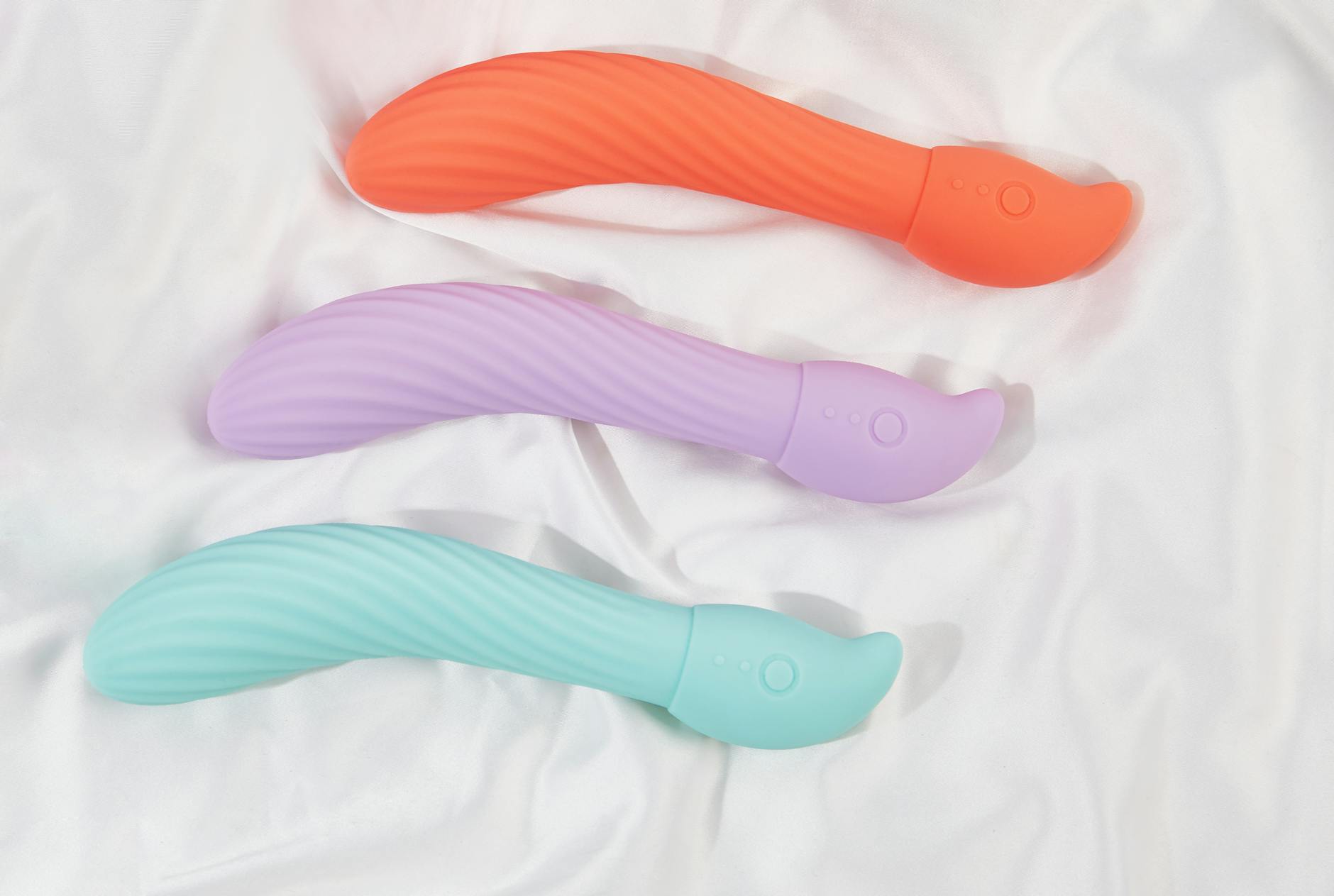
Why Lemon Clitoral Vibrators Work Differently for Vulvas With Low Estrogen Tissue
Estrogen drops. Your clitoral tissue gets thinner. Here's why lemon vibrators are engineered for exactly this shift and why they often feel better than toys designed for thicker tissue.
Estrogen is not just about periods or pregnancy. It's structural. It builds and maintains the thickness, elasticity, and blood flow to your clitoral tissue. When estrogen drops, that tissue gets noticeably thinner. And when tissue gets thinner, the toys that worked brilliantly six months ago can suddenly feel too intense, numb, or even uncomfortable.
This is not a flaw in you. This is biology, and it explains why the conversation around lemon vibrators and low estrogen keeps coming up. The design of lemon clitoral vibrators accounts for this shift in ways that standard vibrators and wand toys often don't.
Let's start with the anatomy. Your clitoris is made of erectile tissue, which means it fills with blood during arousal and swells. Estrogen supports the collagen matrix that gives that tissue its structure and bounce. When estrogen levels fall, that collagen thins out. The tissue becomes less puffy, less resilient, and the nerve endings sit closer to the surface.
This is why everything can feel different at once. The glans (the visible external part of your clitoris) can feel more sensitive or, paradoxically, more numb. The sensation is no longer cushioned by that thick erectile tissue. What used to feel like firm pressure now feels sharp. What used to feel like a buzz now feels like static.
The clitoris doesn't lose sensitivity overall. The nerves are still there. But the signal they send changes because the tissue delivering that stimulation has changed.
Most vibrators are designed for average clitoral tissue thickness. Standard wand vibrators and many clitoral suction toys assume a baseline of tissue density. They deliver stimulation at a rhythm and intensity that assumes there's a buffer of tissue between the stimulator and the nerve endings.
When tissue is thinner, that buffer shrinks. The same vibration that felt delicious now feels too direct, too sharp. The solution isn't to stop using toys. It's to use toys engineered for thinner tissue.
Lemon vibrators work differently because they use a combination of suction and subtle vibration rather than direct percussion. Think of it this way: a wand vibrator is like tapping on a drum. A lemon vibrator is like cupping your hand over the drum and creating gentle pressure changes. With less tissue between the stimulator and your nerves, that softer approach is often more effective.
Suction toys, including the lemon clitoral vibrator, create a seal around the clitoris and then pulse that seal on and off. This activates the nerve endings through pressure and release rather than direct vibration. Because you're not relying on the tissue's thickness to cushion the sensation, the stimulation stays consistent even when the tissue is thin.
The suction also creates a gentle drawing sensation that increases blood flow to the area. For people with lower estrogen, this is actually helpful. It brings more oxygen and nutrient delivery to tissue that's already more fragile. Over time and with consistent use, that improved circulation can even help with lubrication and sensation recovery.
Most importantly, suction-based lemon vibrators give you precise control over intensity. You can start at pattern 1, which is almost undetectable, and work your way up. With a standard vibrator, you're often choosing between "off" and "medium," with few options in between. For thin tissue, that in-between zone is everything.
Lemon vibrators like the Lem come with multiple patterns, not just straight vibration. Pattern 1 might be a gentle pulse. Pattern 3 might add a slight rhythm. Pattern 6 might be a rolling wave. For people with low estrogen tissue, this matters because you're not locked into one sensation. If the clitoris feels too sensitive on one pattern, you switch to another that feels less intense but still pleasurable.
Wand vibrators and traditional clitoral vibrators typically offer intensity levels, not pattern variety. The sensation changes only in amplitude, not in shape or timing. When you're working with thinner, more sensitive tissue, that one-dimensional approach becomes limiting.
Here's a counterintuitive finding: people with low estrogen often report that pressure feels better than vibration. That's because vibration, at its core, is a series of rapid movements. Each movement is a tiny impact on the tissue. When tissue is thin, those impacts accumulate into sensation that reads as overstimulating or numb.
Pressure, by contrast, is sustained. The suction in a lemon vibrator creates that sustained pressure with gentle pulsing rather than rapid buzzing. It's the difference between someone tapping your shoulder repeatedly and someone gently squeezing it. For thinner tissue, the squeeze is almost always more pleasant.
This is why lemon vibrators for sensitive clits have become such a common recommendation. They're not just toys. They're toys designed for a specific tissue state.
When estrogen drops, natural lubrication decreases. Many people assume they need more lubrication because of dryness, but there's another reason lube matters with low estrogen tissue: it protects the thinner tissue during stimulation.
Lube creates a barrier. It reduces the direct friction between the toy and your delicate tissue. For lemon vibrators specifically, water-based lube serves double duty. It helps the suction seal work effectively while also protecting the thin tissue underneath.
Without lube, a lemon vibrator can feel tugging or uncomfortable on low estrogen tissue. With lube, the same toy becomes smooth and gentle. This is one of the most dramatic differences people report when they switch to using lube with a lemon vibrator after low estrogen kicks in.
Menopause is the most obvious catalyst for rapid estrogen drop, but it's not the only one. Low estrogen tissue can happen after hormonal birth control changes, during breastfeeding, with certain medical conditions, or from medications like aromatase inhibitors used in breast cancer treatment.
Whatever the cause, the tissue response is similar. And because these transitions can happen quickly, what worked for you six months ago might suddenly not work anymore. This isn't failure on your part. It's your body signaling that it needs a different approach.
Many people report that once they understand this biological shift, they stop blaming themselves for changing preferences. Your body isn't broken. The toys just need to match the tissue you have now, not the tissue you had before.
One of the most encouraging parts of my work with clients navigating low estrogen tissue is that sensation often comes back. Not overnight, but with consistent use of the right tools and patience, many people report that their clitoris becomes less sensitive to pain and more responsive to pleasure.
Lemon vibrators can actually play a role in that recovery. The improved blood flow from suction, combined with regular stimulation, seems to help rebuild tissue resilience. It's not magic. But the mechanism is real.
If you're used to wand vibrators or traditional clitoral vibrators, the shift to a lemon clitoral vibrator can feel strange at first. The sensation is quieter, more subtle. But for low estrogen tissue, that subtlety is the whole point. You're not looking for the most intense sensation possible. You're looking for the sensation that actually builds pleasure without pain or numbness.
If you're dealing with low estrogen and want to use a lemon vibrator, a few things help immediately.
First, invest in good water-based lube. This is not optional. It transforms the experience.
Second, start at the lowest pattern and intensity. Spend two full weeks at pattern 1 or 2 before you move up. Your tissue needs time to adjust to the new sensation, and your nervous system needs time to recognize pleasure again.
Third, use longer warm-up time. Fifteen to twenty minutes of gentle stimulation before you move to the pattern you actually want. Blood flow takes time to increase when estrogen is low.
Finally, be consistent. Three times a week is better than once a week. Your clitoral tissue responds to regular, gentle stimulation with improved sensation over time.
If stimulation becomes painful rather than just different, talk to a doctor or therapist. Pain can signal an infection, dermatological issue, or pelvic floor tension that needs attention. Pleasure should never hurt, and there are solutions for everything that can feel wrong.
When estrogen drops, the collagen structure of your clitoral tissue thins. This means the nerve endings are closer to the surface and less cushioned. Paradoxically, this can feel like numbness because the sensation becomes less clearly localized. The nerves are still there. The tissue delivering the signal has just changed shape.
Yes, often. The suction mechanism improves blood flow to the area, which delivers oxygen and nutrients to recovering tissue. Combined with regular, gentle stimulation, many people report improved sensation within four to eight weeks. This isn't a guarantee, but it's a real pattern clinicians observe.
Technically no. Practically, almost always yes. Lube protects thin tissue during stimulation and helps the suction seal work more smoothly. Without it, many people report tugging, discomfort, or a sensation that feels too intense. With lube, the same toy feels gentle and effective.
Sensitivity means you feel more, often to the point of discomfort. Numbness means you feel less or feel sensation in a dull, distant way. Low estrogen can cause either, or both at different times. The solution is the same: a toy designed for thinner tissue, like a lemon vibrator, used with patience and lube.
Some people do, but it often requires turning the intensity down to the lowest setting and using substantial lube. Since wand vibrators are designed for thick tissue, you're fighting the design. A lemon vibrator is designed for your actual tissue state, so it requires less workaround and usually feels better faster.
This depends on the cause of low estrogen, how long you've had it, and your body's individual response. Some people notice improvement in two to three weeks. Others need eight to twelve weeks of consistent, gentle use. Patience here is not weakness. It's how your nervous system relearns pleasure.
Low estrogen tissue is not a life sentence of reduced pleasure. It's a tissue state that requires toys and approaches designed for it. Lemon clitoral vibrators fit that requirement in a way few other toys do. They work with your actual biology, not against it.
If you're navigating this shift and feeling confused or frustrated, you're not alone. Thousands of people have gone through exactly this transition and found their way back to pleasure. The first step is understanding that your tissue changed, not that you broke. The second step is finding tools, like the Lem, designed for tissue in its current state. Everything after that is just patience and consistency.
Have questions about your body, your toys, or navigating low estrogen? Get in touch. We're here to help.
Sources
Goldstat, B., et al. (2003). "Transdermal testosterone therapy improves sexual function in surgical menopausal women not receiving oestrogen therapy." Fertility and Sterility, 79(4), 944-946.
Dennerstein, L., Dudley, E., & Burger, H. (2001). "Are changes in sexual functioning during midlife due to aging or menopause?" Fertility and Sterility, 76(4), 855-860.
Nappi, R. E., & Kokot-Kierepa, M. (2012). "Women voices in the menopause: Results from an international survey on vaginal health." Maturitas, 62(4), 438-445.