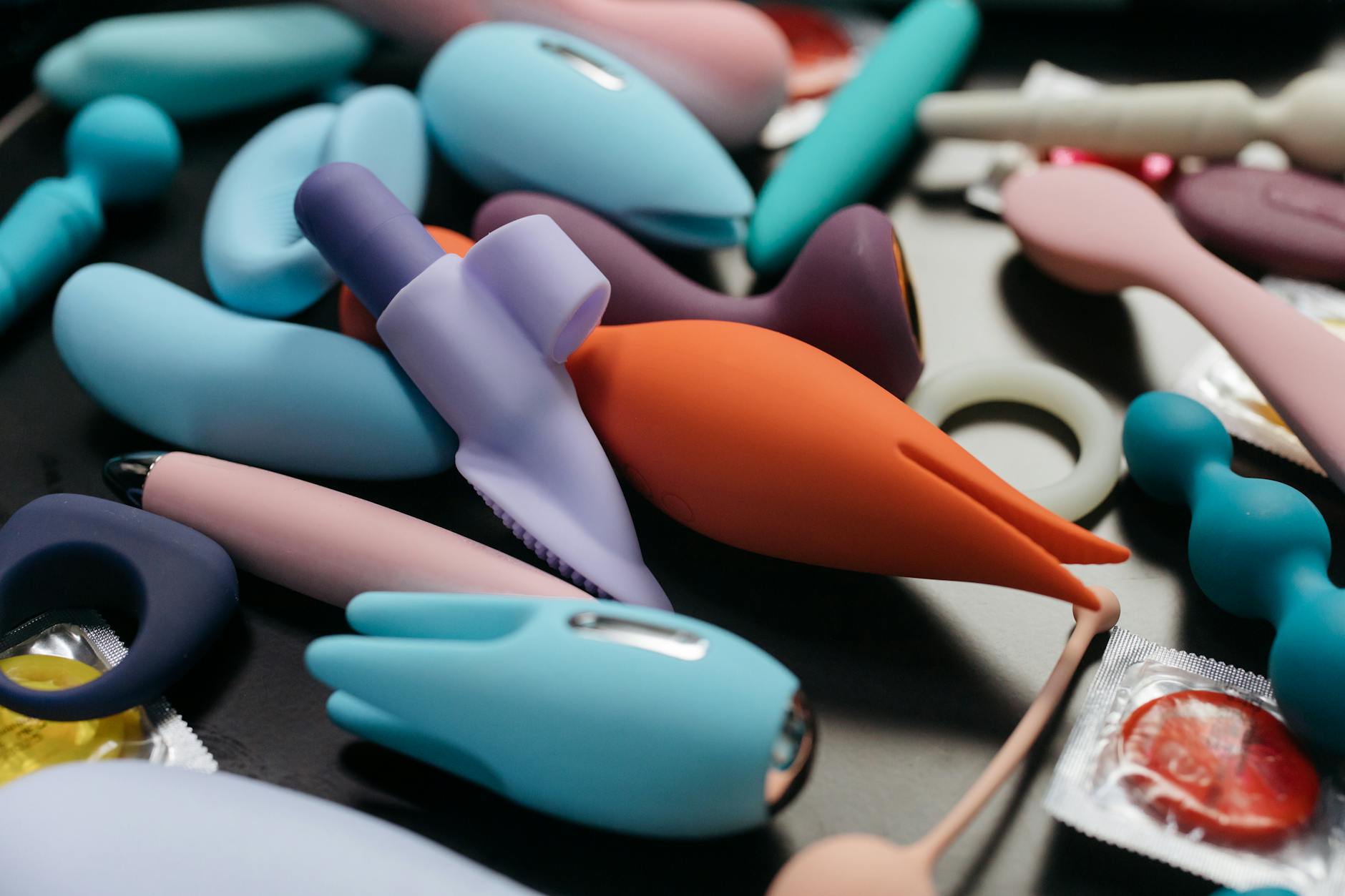
Let's be real. Most people think all clitoral vibrators do basically the same thing, just with different brand names slapped on. That's wildly wrong, and the difference between a lemon vibrator and a wand vibrator is so significant that choosing the wrong one can genuinely change how you experience pleasure.
Wand vibrators use rapid oscillation. They vibrate side-to-side or up-and-down at speeds usually between 4,000 and 10,000 cycles per minute, depending on the setting. This creates broad, dispersed stimulation across a wider surface area of the clitoral complex.
When you press a wand against your body, you feel vibration coursing through the tissue. The sensation fans outward. For many people, especially those newer to vibrators, this feels immediately satisfying because the stimulation spreads across more nerve endings at once. It's like the difference between a spotlight and floodlights. Wands are floodlights.
The upside: accessibility. Wands are intuitive. They require minimal technique. You don't need to know anything about your body to use one effectively.
The downside: that broad stimulation can feel overwhelming or even numbing over time, especially if you use the same toy repeatedly. The clitoris adapts to sustained stimulation, and some people find they need increasingly higher intensity to feel the same sensation.
Lemon clitoral vibrators use pulsed suction. Instead of vibrating side-to-side, they create a gentle rhythmic draw that simulates oral stimulation. This is a fundamentally different neurological trigger than vibration.
Instead of distributing stimulation across a wide zone, suction concentrates sensation directly on the sensitive clitoral head. The stimulation pattern mimics the actual rhythm of pleasure that your body knows from partnered oral sex. Your nervous system recognizes this pattern, which is why many people find suction-based toys feel more intense, more targeted, and closer to partnered pleasure than vibration ever has.
The lemon sucker approach means you're working with your body's own expectations, not against them.
Here's what I hear from clients who have tried both:
On wand vibrators: "It feels like buzzing. After five minutes my whole vulva feels tingly and a little numb. I need it on the highest setting to feel anything. It's good, but it feels separate from me somehow."
On lemon vibrators: "It feels like pressure that changes. It's more like being touched than being vibrated. Orgasms feel different. Deeper somehow. More focused."
Both can absolutely produce orgasm. But the pathway to that orgasm, and the sensation of it, can be surprisingly different. This matters because pleasure is as much about the journey as the destination.
People who like broad, surface-level stimulation. People who are still learning their bodies and want something intuitive and forgiving. Anyone with decreased clitoral sensitivity who needs dispersed, high-intensity stimulation to feel anything at all. People who enjoy partnered play and want the toy to complement (not mirror) what's happening with a partner.
Lemon vibrators and other suction toys work better for:
Anyone who loves or has enjoyed oral sex and wants to recreate that sensation solo. People with particularly sensitive clitorises who find traditional vibration uncomfortable or too scattered. Folks looking for focused, targeted pleasure that feels almost meditative rather than intense-and-scattered. Anyone trying to understand their clitoral response better because suction provides clearer feedback about what's actually working.
If you're at a stage where you're experimenting with different pleasure styles, this distinction genuinely matters.
Your clitoris is more than what you see externally. The visible part is just the glans. The actual clitoral structure extends internally, with a shaft and two arms that wrap around the vaginal opening. A wand stimulates the external glans broadly. Suction creates a specific pressure dynamic that can engage more of that internal structure.
This is why someone might have zero response to a wand but find a lemon vibrator absolutely revelatory. You're not broken. You're just accessing the anatomy in a different way.
Similarly, different positions, different levels of arousal, and different times in your cycle all change which approach feels better. This is worth exploring rather than assuming one is objectively superior.
Here's a secret: you don't have to choose. Many people keep both on hand because they serve different purposes. A wand works beautifully for quick, scattered pleasure when you're pressed for time. A lemon vibrator becomes the go-to for deeper, more meditative solo sessions where you want to really explore sensation.
In partnered play, some people use a wand because it feels less like the toy is replacing the partner's role, and suction feels too much like mimicry. Others use a lemon vibrator specifically because it provides targeted stimulation that their partner can't easily offer with hands or mouth alone.
There's no wrong answer. There's just your answer.
Wand vibrators typically offer multiple speed settings (usually 3 to 10), so you can start low and build. This is genuinely helpful for learning what your body wants.
Lemon vibrators work differently. They usually have multiple suction intensity levels rather than speed levels. You're not speeding up the vibration. You're adjusting how strong the draw is. This matters because intensity works differently in suction than in oscillation. Low suction can feel more sustained and intimate. High suction becomes more aggressive and intense.
If you're switching from a wand, don't make the mistake of going straight to high suction. Start low and let your body adjust to the sensation.
One thing I mention to clients: both wand vibrators and lemon vibrators can contribute to what's called "vibrator dependency," where your body adapts to artificial stimulation and takes longer to respond to partnered touch. This isn't about being broken. It's about adaptation.
If that's a concern for you, suction-based toys sometimes feel less problematic because the sensation profile is closer to what partnered sex actually feels like. Your nervous system doesn't have to recalibrate as drastically between solo and partnered play.
That said, using either toy consistently without ever exploring hand stimulation or partnered touch does create adaptation. Mix it up. Spend weeks with toys, then weeks exploring sensation without them. Your body benefits from the variety.
If you're genuinely uncertain, here's what I recommend: borrow or read detailed reviews from people with similar bodies and similar preferences to you. Don't just read "five stars, amazing." Read the reviews that say "I usually hate wands and this was different" or "I've tried suction toys and this is my favorite" because that tells you something real.
If you're shopping from Hello Nancy, read the reviews on the product pages. You'll see patterns about who gravitates toward the lemon vibrator versus other styles. Pay attention to the language people use about sensation, not just about whether it "worked."
When you do try a new toy, give it at least 3 to 5 solo sessions before deciding whether it's right for you. Your body needs time to recognize the sensation and respond. First-time use is almost never the full picture.
Neither wand vibrators nor lemon clitoral vibrators are objectively better. They're different technologies creating different sensations. Your job is to figure out which sensation profile actually matches your body and your desires.
That's not shallow. That's intelligence. Your pleasure deserves specificity, and taking time to understand what actually works for you is one of the most grounded things you can do.
Absolutely. Some people alternate between them in a single session for variety. Others use a wand for external stimulation while using suction internally or vice versa. The only real rule is what feels good. If you want to combine them, start with lower intensities on both and build from there. Your nervous system is processing two different stimulus patterns simultaneously, which can feel amazing or overwhelming depending on your mood and your body that day.
It's not actually more intense in the clinical sense. It just feels that way because suction creates localized, concentrated stimulation directly on the clitoral glans, whereas a wand's vibration disperses across a wider area. Your nervous system perceives focused sensation as stronger even if the total energy output might be lower. This is why people sometimes switch from a wand because they thought they needed high intensity, when what they actually needed was focused sensation.
Not universally. Some people find lemon vibrators lead to faster, more intense orgasms. Others find they prefer the build-up and release that a wand creates. It depends on your nervous system, your arousal pattern, and honestly, what day it is. Many people find both produce different types of orgasm (wand = broad and radiating, lemon = focused and concentrated), and they enjoy variety.
No. Wand vibrators are safe when used as directed. The concern some people raise about adaptation is real, but it's not damage. Your nervous system adjusts to consistent stimulation just like it adjusts to any repeated stimulus. If you notice you're losing sensation over time, the solution is taking breaks, not assuming the toy is harmful. Your clitoris is resilient.
Wand vibrators are more intuitive for absolute beginners because the stimulation pattern is more obvious and forgiving. You can press it anywhere and get sensation. Lemon vibrators require a bit more learning about positioning and suction intensity to use effectively. If you've never used any vibrator, a wand is a gentler entry point. If you've used other toys and found them too scattered, lemon vibrators often feel revelatory.
Yes, and some couples love this. A wand creates broader, more visible stimulation, which some partners enjoy watching. A lemon vibrator creates more localized sensation, which some people prefer during partnered sex because it leaves more room for the partner's involvement. There's no rule except communication. Talk about what you want to explore before you explore it.
You're not choosing between good and bad. You're choosing between two different types of good. The best toy is the one that makes your body feel seen and celebrated. Whether that's a wand vibrator or a lemon clitoral vibrator from Hello Nancy, the only opinion that matters is yours.
If you're curious about exploring different approaches to pleasure or have questions about what might work for your specific body, I'm here. Get in touch at /contact and let's talk through what you're looking for.