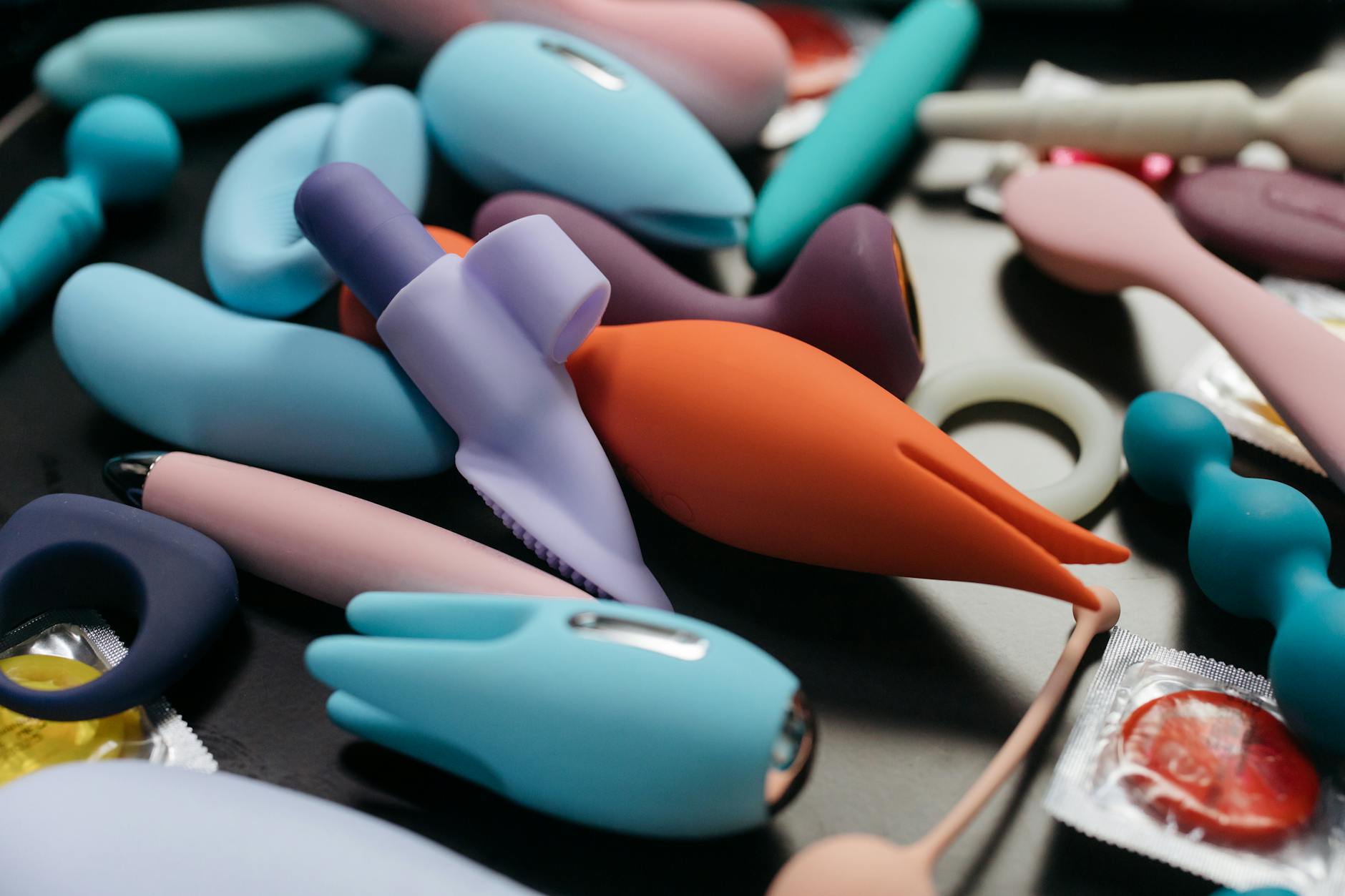
How to Use Lemon Vibrators When Birth Control Changes Your Pleasure Response
Birth control rewires arousal timing, blood flow, and sensitivity. Here's what actually changes with your body, and how lemon clitoral vibrators work with your new rhythm.
Birth control changes how your body experiences arousal. Not your capacity for it. Not your desire. But the mechanics. The timeline. The way sensation builds and peaks. Most people cycle on or off hormonal birth control without realizing their pleasure response has shifted, then blame themselves when things feel different.
That's backward. Your body isn't broken. It's just operating with a different hormonal blueprint. And if you understand how, using lemon vibrators becomes a lot more effective.
Hormonal birth control works by suppressing your natural estrogen and progesterone cycles. In their place, it delivers a steady, synthetic dose. This is why you're stable, protected, and often less bloated. It's also why your pleasure response might feel muted or delayed.
Here's the neuroscience part, stripped down: estrogen affects blood flow to genital tissue and speeds up the production of nitric oxide, a chemical that helps the clitoris swell and sensitize. When estrogen levels are lower or flattened (which happens on most hormonal birth control), that cascade moves slower. Your clitoris still responds. It just needs different conditions to wake up.
Progesterone, meanwhile, can dull sensation overall. Some people on birth control report that their skin feels less alive, that touch registers as muffled. That's progesterone at work. It's one reason why lemon clitoral vibrators often outperform hand stimulation on hormonal birth control. The suction mechanism doesn't rely on your tissue sensitivity alone. It creates its own stimulus independent of how much sensation you're naturally registering.
If you've been on birth control for months or years, your baseline arousal timeline has probably adjusted downward without you noticing. What used to take five minutes might now take fifteen. That's not laziness or relationship trouble. It's neurochemistry.
The practical fix: budget differently. If you're used to a ten-minute warm-up, try twenty. Start with lower-intensity patterns on your lemon vibrator (patterns one through three). Many people find that the gap between sensation and full arousal shrinks once they stop trying to force the old timeline and meet their body where it actually is.
Another timing shift happens mid-cycle. On hormonal birth control, you don't actually ovulate, so there's no estrogen spike mid-month. Some people notice they feel more consistently muted. Others find that their pleasure is actually more stable because the hormonal rollercoaster is gone. Both are normal.
Birth control narrows blood vessels slightly in some people, especially with progestin-only methods like the mini-pill or IUD. This means less engorgement in the clitoris during arousal. Your clitoris gets less plump, less exposed, less easy to stimulate manually.
This is where lemon vibrators shine. The suction mechanism on devices like the Lem works by creating a gentle vacuum around the clitoris, which pulls blood into the tissue and engorges it manually, independent of your body's natural vascular response. You're essentially borrowing a bit of extra blood flow from the device itself. This makes sensation feel sharper and more localized, which many people on hormonal birth control report as deeply satisfying.
If you're switching from a method with high progestin (like some IUDs or the mini-pill) to a lower-dose combined pill, you might notice sensation returning gradually over three to six months. This isn't failure. It's your tissue adjusting. Lemon adult toys work just as well during the adjustment period. Your body isn't going anywhere.
Not all birth control affects pleasure equally. The combined pill (estrogen plus progestin) tends to be gentler on arousal than progestin-only methods. Ultra-low-dose pills feel different from standard-dose ones. The hormonal IUD affects some people and not others. The implant and shot can hit pleasure harder because they deliver steady, high progestin.
If you switched methods recently and your pleasure response tanked, it might not be permanent. Many people see sensation return three to six months after starting, once their body acclimates. Using a clitoral vibrator during this window helps. The stimulation keeps the neural pathways active and reminds your body that pleasure is still possible, even if it feels muffled.
Honestly though, if a specific method is making you miserable and nothing helps after six months, that's useful information. You're allowed to switch. Your pleasure isn't a luxury add-on to birth control. It's part of your quality of life.
Without a real cycle, you're not riding the wave of natural estrogen anymore. So when's the "best" time to use a lemon clitoral vibrator on birth control? Whenever you want, because your hormones aren't spiking and crashing.
But here's a practical trick: arousal tends to build more easily when you're relaxed and fed. So evening, after you've eaten, when you're not thinking about work, often works better than a rushed morning session. Your nervous system is already engaged. Your blood isn't being diverted to digestion. This matters more on birth control than it did before, because your baseline arousal is already lower. You need fewer competing demands.
Also, consistency helps. If you use lemon vibrators two or three times a week, your tissue stays more responsive than if you use them sporadically. You're training your body to respond faster, to maintain some of the blood flow and nerve sensitivity that hormonal birth control suppresses. Some people report that after a few weeks of regular use, their arousal timeline creeps back closer to where it was before.
If birth control tanked your pleasure and nothing's coming back after six months, a gynecologist who specializes in sexual function can check a few things. Sometimes adding a small dose of testosterone cream on top of birth control helps. Sometimes switching the birth control method itself is the answer. Sometimes it's not the birth control at all. Stress, relationship changes, or medication interactions can look identical.
If you're partnered, the conversation gets slightly different. "My birth control is making arousal slower" is data you can share. It's not something your partner fixed. It's something you two adapt to together. That might mean longer foreplay. It might mean using lemon sexual toys as a bridge tool instead of a main event. It might mean your partner learns that waiting twenty minutes instead of ten isn't laziness. It's your body's current reality.
Most people on hormonal birth control grieve the loss of spontaneous arousal. You used to feel a flutter and be ready. Now you need intention. You need setup time. You need a clitoral vibrator to tip things into full sensation.
That's not a loss. That's information. It means you get to be intentional about your own pleasure, which weirdly often makes it better. You're not waiting for your body to spontaneously decide it wants sex. You're choosing when you want to explore sensation with a lemon vibrator, and meeting that choice with tools that actually work for you now.
Birth control is a trade-off, not a punishment. You get to choose what that trade-off is worth. And if pleasure matters to you, that's valid. Shop Lemon Toy's clitoral vibrators exist partly because people on birth control realized they needed different tools to feel the same intensity. You're not broken. You're just using a different method to get the same result.
No. When you stop taking it, your hormones rebound and arousal usually returns to baseline within one to three cycles. While you're on it, sensation is muted but not gone. Using lemon clitoral vibrators during this time keeps your neural pathways active. Many people find that stopping birth control feels like turning the volume back up, not restoring something that was lost.
Combined pills with lower progestin doses tend to be gentler than ultra-high-dose methods. The copper IUD doesn't affect hormones at all, so pleasure response stays the same. Progestin-only methods (the mini-pill, hormonal IUD, implant, shot) hit sensation harder for some people. But everyone's different. What tanks pleasure for one person barely registers for another. Tracking your own response over a few months tells you more than generalized data.
Not fix, but adapt. A lemon sucker like the Lem doesn't change your hormones. It bypasses some of the sensation loss by creating external stimulus that your body doesn't have to generate on its own. Many people find this enough to feel satisfied. If it's not, that's a conversation for your gynecologist, not something you should white-knuckle through alone.
Typically three to six months. Your body needs time to acclimatize to the new hormone load. During this window, lemon vibrators can help bridge the gap. They give you sensation when your body is still recalibrating. If arousal hasn't budged after six months, something else might be going on. That's worth investigating with a professional.
Yes, slightly. On birth control, start with lower intensity patterns and longer warm-up time. Your tissue is less engorged naturally, so patterns that feel gentle at first might become intense once blood flow builds. Think of it like a car on a cold engine. It needs time to warm up. The Lem's lower patterns are perfect for this because you can start subtle and build at your own pace.
Maybe. If your pleasure response is important to you, and birth control is significantly flattening it, and nothing's helping, that's real data. You get to weigh that against the protection and period management benefits. It's not selfish to say, "This method isn't working for my whole life, not just contraception." Talk to your doctor about alternatives. There are enough options that you shouldn't have to choose between protection and pleasure.
Birth control changes arousal. That's chemistry, not character. Using lemon clitoral vibrators works with your body's current state instead of fighting it. You might need longer warm-up time, lower intensity patterns, or just the acceptance that sensation feels different now. That's not failure. That's adaptation. And adaptation, once you stop resisting it, often leads to pleasure that's just as good as before. Sometimes better, because it's intentional instead of spontaneous. Reach out to contact us if you have questions about finding the right tool for your body.