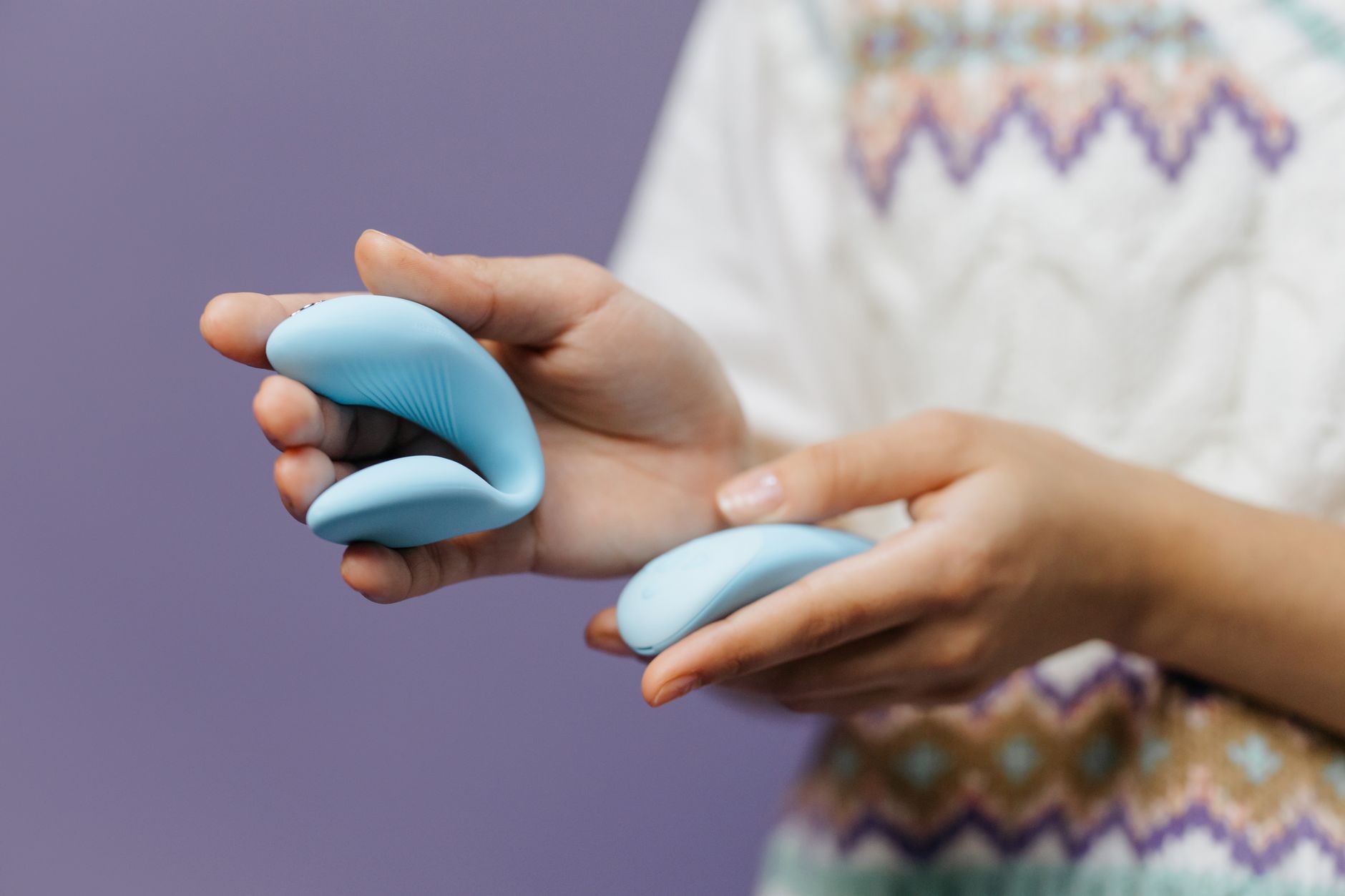
How to Use Lemon Vibrators When Your Partner Wants to Participate
Moving from solo pleasure to partnered play means rethinking control, timing, and what intimacy actually looks like together. Here's how to make it work.
Your partner wants to use a lemon vibrator with you. This is good news. It's also the moment where a lot of couples get stuck, because no one quite knows what "together" actually means. Does your partner hold it? Do you? Who decides the settings? What happens if it doesn't feel good in the moment?
Honestly, most of the tension around partnered toy use isn't about the toy. It's about handing over control, learning a new rhythm together, and admitting that pleasure doesn't always sync up the same way it used to. But here's what I've seen work: clarity beats spontaneity every single time.
This needs to happen outside the bedroom. Full stop. Not five minutes before, not during foreplay when blood is rushing elsewhere. Pick a normal moment. Coffee, car ride, post-dinner cleanup.
Here's what to cover:
What do you each want from this? Your partner might want to feel involved in your pleasure. You might want hands-free stimulation while your partner focuses on something else. Those aren't the same goal, and knowing the difference matters. Ask directly: "What are you hoping this will do for us?"
Who holds the vibrator? This is the biggest practical question and it trips up almost everyone. Your partner holding a lemon vibrator on you means they control the pressure, angle, and intensity. That can feel amazing. It can also feel like you're not in control of your own body. Be honest about what you want. Try both ways a few times before deciding what sticks.
Pressure settings and pacing. The lem vibrator has a range. You probably have a sweet spot. Tell your partner where it is. "I like it best at level 2 or 3" is useful information. "Start gentle and build up" is even better.
Let's talk about what actually happens when two bodies are in the room with one lemon clitoral vibrator.
Setup matters. You need to be comfortable. Pillows, positioning, access. If you're lying down and your partner is sitting beside you, they need a good angle. If you're facing each other, the geometry changes. Spend thirty seconds thinking about this before you start. Awkward positions kill pleasure faster than anything.
Pressure is different when someone else is holding it. When you hold your own vibrator, you calibrate constantly. Micro-adjustments. Your partner won't do that automatically. They'll either press too hard or hover too far away. This is normal. Talk them through it. "A bit more pressure" or "hold it just where you were" are coaching sentences, not criticism.
Speed and rhythm are now collaborative. If your partner is thrusting or moving while the vibrator is on your clitoris, that's a different sensation than solo use. Some people love it. Some people find it overstimulating. Know which camp you're in before you're mid-session.
Your hands are free now. This is the actual gift of partnered toy use. Your hands can touch your partner, touch yourself elsewhere, or just rest. You can pay attention to sensation instead of logistics. That mental shift alone changes everything.
Here's a thing nobody warns you about: lemon vibrators work fast. Really fast. If you're someone who can orgasm in 5-10 minutes with a clitoral vibrator, you might finish before your partner is even warmed up.
That's not a problem unless you treat it like one.
The conversation you need is: what happens after you come? Does your partner want to continue with you? Do they want to switch to something else? Does pleasure need to be simultaneous to count?
When you bring a partner into pleasure that you've been managing solo, sometimes unexpected feelings pop up.
Your partner might feel insecure. "Is the vibrator better than me?" This is the question nobody asks directly, but it lives in the room. The answer is: the vibrator isn't better. It's different. It does one thing really well. It doesn't mean your partner is failing. You can reassure them by showing that the vibrator is part of sex with them, not a replacement for them.
You might feel exposed. Watching someone watch you respond to something is vulnerable. You're not hiding your pleasure anymore. You're not performing. Some people find that liberating. Some people find it initially uncomfortable. Both are fine. The discomfort usually passes with repetition.
Either of you might notice jealousy or resentment surfacing. That's usually not about the toy. It's about attention, timing, or feeling wanted. Address the actual issue, not the toy. "I feel like you're more interested in the vibrator than in me" is rarely the real sentence. Usually it's "I miss when sex was easier between us" or "I don't feel like you desire me the way I desire you."
Stay curious about the feelings. Don't blame the lemon clitoral vibrator for things it didn't actually cause.
When a toy was only yours, you knew where it was. Now it's something you're using together. That means you need to talk about where it lives.
Some couples keep it in the bedroom and accessible. Some keep it in a shared drawer. Some keep it somewhere private. This sounds trivial until someone wants to initiate and can't find it, or feels weird accessing it because the partner might see.
Also decide: whose responsibility is cleaning and care? If you're sharing, are you sharing the maintenance too? How lemon vibrators change after regular use and storage matters for longevity. A quick rinse after use and a dry place to rest keeps it functional for years. If one person is always doing the work, that quietly builds resentment.
First partnered session shouldn't have expectations attached. Think of it as a test run, not a performance.
Start with the conversation settled. Have the toy nearby but not the focus yet. Move through normal foreplay. When you're both interested, introduce the vibrator. Start on a low setting. Your partner holds it while you guide the angle. No rush to do anything particular. Just feel how it's different.
If it feels good, stay there. If it doesn't, pause and adjust. Try a different speed, different angle, different pressure. You're gathering information about what works when there are two of you instead of one.
After (whether you came or not), talk about it. Not a therapy session. Just "that felt good" or "I'd like to try X different next time" or "let's do that again." The feedback loop is what teaches you both.
Sometimes inviting a partner into your pleasure brings up old stuff. Maybe you have a history where sex felt unsafe or coercive. Maybe you've spent years keeping pleasure private as a form of independence. Maybe you're grieving a version of sex that used to feel easier.
If strong emotions come up, pause. You don't need to push through it. Talk to your partner about what surfaced. If it's something bigger, consider a therapist who works with couples. This isn't a failure of the experiment. It's information about what you need.
After the first few times, it becomes routine. That's actually healthy. Routine means it's integrated into how you are together.
But sometimes the novelty wears off and one person gets bored or withdrawn. Check in periodically. "Are you still into this?" "Should we try something different?" Pleasure evolves. What worked six months ago might feel flat now. That's not a sign to give up. It's a sign to get curious again.
Will my partner feel emasculated if I use a lemon vibrator during partnered sex? Not if he's secure in himself, and yes if his whole identity depends on being the sole source of your pleasure. This is a him problem, not a vibrator problem. A good partner wants you to feel good, and wants to be part of that. If he can't get there, that's worth exploring together or with a therapist.
Can my partner use the lemon clitoral vibrator on themselves too? Yes, though the curve is designed for external clitoral stimulation, not internal use. Some partners enjoy using it on themselves while you watch or participate. Others prefer different toys. Let them experiment and find what works for their body.
How do I bring this up without sounding like I'm rejecting them? Lead with what you want, not what's missing. "I want to try using a vibrator together" is different from "you're not doing it right." Frame it as expansion, not correction. "I've been using one alone and I'd love for you to be part of that" positions the partner as an addition, not a fix.
What if they want to use the lemon vibrator but I don't feel like participating? That's allowed. You can say no. You can also set a boundary: "I'm down for this on Tuesday, but not tonight." Consent runs both directions. If someone is pushing for participation when you're not ready, that's a separate conversation.
Is there a "right" way to position ourselves? There are comfortable ways and uncomfortable ways, but no universally right way. What works depends on your bodies, your flexibility, and your preference. Try lying down together. Try sitting. Try standing. What feels good is the right answer.
How often should we do this? Whatever frequency keeps it fun and connected. Some couples use the lemon vibrator together every time they have sex. Some use it occasionally. Some try it a few times and decide it's not their thing. There's no quota. Check in with each other and adjust.
Using a lemon vibrator as a couple means trusting each other with pleasure and being willing to learn what works together. It means conversations that feel awkward at first and then become normal. It means sometimes discovering that what you thought you wanted isn't actually what feels good.
That's not a failure. That's the opposite of a failure. That's actual intimacy. That's showing up for each other in a way that requires honesty and willingness to adjust. If you want help with the bigger picture of rebuilding connection, reach out at Shop Lemon Toy for guidance tailored to your situation.