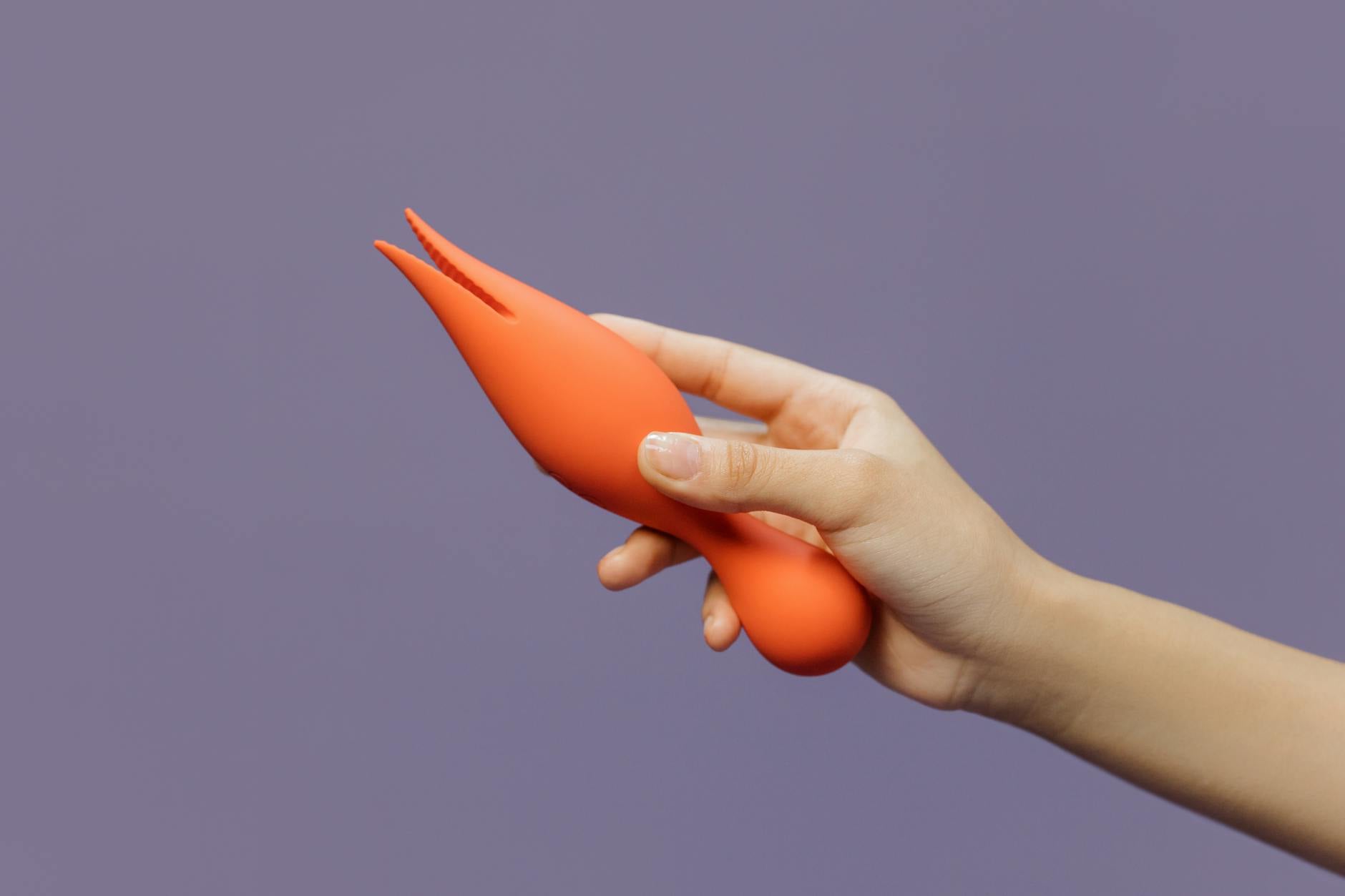
How to Use Lemon Vibrators for Better Orgasms When You Have Lower Libido
Low desire doesn't mean your body can't respond. A lemon clitoral vibrator works differently than you'd expect. Here's how to use one when your libido is lagging.
Low desire and orgasmic response are not the same thing. You can have almost no appetite for sex and still experience intense pleasure once arousal is actually happening. This distinction matters because most people treat lower libido like a flat tire. They assume nothing works until they fix the "real problem." But that's backwards.
A lemon clitoral vibrator bypasses the early stages of desire entirely. It doesn't ask your brain to want sex. It directly engages the neural pathways that create physical pleasure. For people with lower libido, that's genuinely useful.
Desire is a drive. It's your brain saying "I want this." Pleasure is a sensation. It's your body responding "this feels good." When your libido is low, the drive is dampened. The capacity for sensation is usually still intact.
This happens for a bunch of reasons. Stress, medication, relationship friction, hormonal shifts, burnout, untreated depression. Sometimes it's situational. Sometimes it's chronic. But the underlying physiology is important: your clitoris has about 8,000 nerve endings. Those don't shut off just because your desire is low.
The gap between desire and response is where a lemon vibrator becomes a bridge. It creates arousal through direct stimulation. Your brain doesn't have to meet it halfway.
The beauty of a lemon clitoral vibrator is that it doesn't require psychological buy-in to work. You don't need to want sex. You don't need to be in the mood. You just need ten uninterrupted minutes and a toy that knows how to talk to your clitoris.
A lemon vibrator uses suction and pulsation patterns instead of simple vibration. This is relevant because suction engages a wider nerve network than traditional buzzing. When your libido is low, traditional vibrators often feel like you're checking a box. Suction-based stimulation feels like something is actually happening to your body.
The pattern variation matters too. Most people with lower libido benefit from starting on a lower setting and spending 3 to 5 minutes there before ramping up. That gives your nervous system time to catch up with the sensation. You're not forcing arousal. You're letting it build.
Four things change the experience when your libido is lagging:
Make it low-friction. Don't tell yourself you're having "sex." Don't build it into a plan. Just sit with it. Five minutes on the couch, alone, with your lemon vibrator. No pressure to finish. No timer. The goal is sensation, not achievement.
Use plenty of water-based lubricant. When desire is low, natural lubrication often is too. Adding lube is not a sign something is wrong. It's a practical tool that helps your body respond. It changes the sensation from friction to glide.
Start with lower settings. If your libido is low, your nervous system is already somewhat dysregulated. High intensity immediately can feel overwhelming. Patterns 1 through 3 on your lemon clitoral vibrator are designed to build arousal gradually. Spend time here.
Stop thinking about your partner. If you're partnered and your libido mismatch is a source of tension, solo time with a lemon vibrator is therapeutic. It reminds your body that it can still feel pleasure. That matters. It breaks the shame spiral that usually makes lower libido worse.
Your clitoris doesn't care if your brain is interested. It responds to stimulation regardless of desire. This is not a flaw in how you're wired. It's a feature. In fact, many people with chronically low libido report that using a lemon vibrator solo is the only time their pleasure actually increases.
Why. Because there's no performance pressure. No expectation. No waiting for desire to arrive before something happens. You're creating the conditions for pleasure to exist independently of motivation.
Over time, reconnecting with that sensation can actually shift your baseline desire. Not always. But often. When your body remembers what pleasure feels like, your brain starts to want it again. It's gradual. It's not magic. But it works.
If you're in a partnered relationship and your lower libido has become a source of distance, using a lemon vibrator solo first is strategic. Get comfortable with your own pleasure. Let your nervous system settle. Then, when you're ready, you might introduce your partner.
How. Not as a solution to your low desire. Not as a performance hack. Just as a new sensation you're both curious about. Your partner doesn't operate the lemon vibrator. You do. They watch, or they don't. The goal is for you to experience pleasure while they're present. That's different from partnered sex. It feels different. It doesn't trigger the same pressure.
Many couples find that this is what actually rebuilds intimacy when libido is low. Because the focus shifts from "why don't you want me" to "here's what feels good." That's a conversation you can win.
Lower libido often comes with shame. You feel like you're failing your partner, or yourself, or both. A lemon vibrator doesn't erase that. But it does create evidence that your body still works. Your capacity for pleasure is intact. The gap between desire and response is real, but it's not permanent.
Give yourself three weeks of solo exploration. No expectations beyond sensation. Use your lemon clitoral vibrator consistently. Notice what patterns feel good. Notice if arousal builds faster over time. Most people find it does.
If your libido doesn't shift after a month, see someone. Lower desire that persists can be a symptom of depression, hormonal imbalance, relationship problems, or medication side effects. A therapist or doctor can help you figure out which.
But that investigation doesn't start from "something is broken." It starts from "I'm reconnecting with pleasure," and then looking at what's blocking desire from following. That's a completely different frame.
Maybe. Consistent pleasure can nudge your brain toward wanting more sex. But a lemon vibrator is not a cure for low desire. If your libido is low because of depression, relationship problems, medication, or hormonal shifts, a vibrator will help you experience pleasure. It won't fix the underlying cause. That requires treating the cause itself. The vibrator is a bridge. The actual work happens elsewhere.
No. Using a toy because the sensation feels good is different from struggling with desire. If you enjoy using a lemon clitoral vibrator solo but don't initiate partnered sex, that's not a dysfunction. That's a preference. The two things are separate. Know the difference.
That's a relationship conversation, not a vibrator problem. Your pleasure is your business. If your partner feels insecure, that's real, and it's worth exploring together. But the solution is not to stop using a lemon vibrator. The solution is understanding why they feel threatened. Usually it's about feeling replaced, or feeling like they're not enough. A therapist can help with that. Solo pleasure with a lemon vibrator is not infidelity. It's self-care.
Your body adapts to sensation over time. You might need different patterns or more time to build arousal. But that's not the vibrator failing. That's your nervous system adjusting. The solution is variation. Switch up your routine. Try different settings. Some people alternate between solo and partnered use. Others take breaks. It's not complicated.
Yes and no. A lemon clitoral vibrator can help you experience pleasure despite medication side effects. But it won't fix the underlying problem. Talk to your doctor about your libido. Some medications have alternatives. Some don't. If the side effect is real and unchangeable, a lemon vibrator becomes a tool for managing it, not solving it. That's still useful.
No. Solo pleasure is not infidelity. If your partner considers it infidelity, that's a values conversation you need to have directly. Some couples are comfortable with it. Some aren't. Your job is knowing your own boundaries and communicating them clearly. Your partner's job is listening. If you can't reach agreement, that's relationship work, not a vibrator problem.
Lower libido is not a character flaw. It's not a sign that you're broken or that your relationship is doomed. It's a signal that something in your life needs attention. A lemon vibrator can help you stay connected to your body while you figure out what that something is. Use it. Explore it. Let your body remember what pleasure feels like. The rest will unfold from there.
If you're struggling with libido and it's affecting your relationship, consider talking to someone trained in sex therapy or couples counseling. A professional can help you separate the biological, emotional, and relational pieces. That's where real change happens.
Your pleasure matters. Even when desire is low. Especially then.