You're not worried the lemon vibrator won't feel good. You're worried your partner will feel replaced, rejected, or like you're saying his body isn't enough. That's the actual anxiety, and it's worth taking seriously because it's completely understandable. But here's what I've seen after years of working with couples: the awkwardness lives almost entirely in your head before you say anything. Once it's spoken aloud, it dissolves fast.
The gap between "this is terrifying to bring up" and "oh, we're doing this together" is smaller than you think. I'm going to walk you through exactly how to close it.
When someone hears "I want to use a toy with you," what they often unconsciously hear is "you're not doing enough." It doesn't matter if that's what you mean. It's the fastest thought loop in their brain. So your job isn't to convince them the toy is good. Your job is to reframe what the tool actually does.
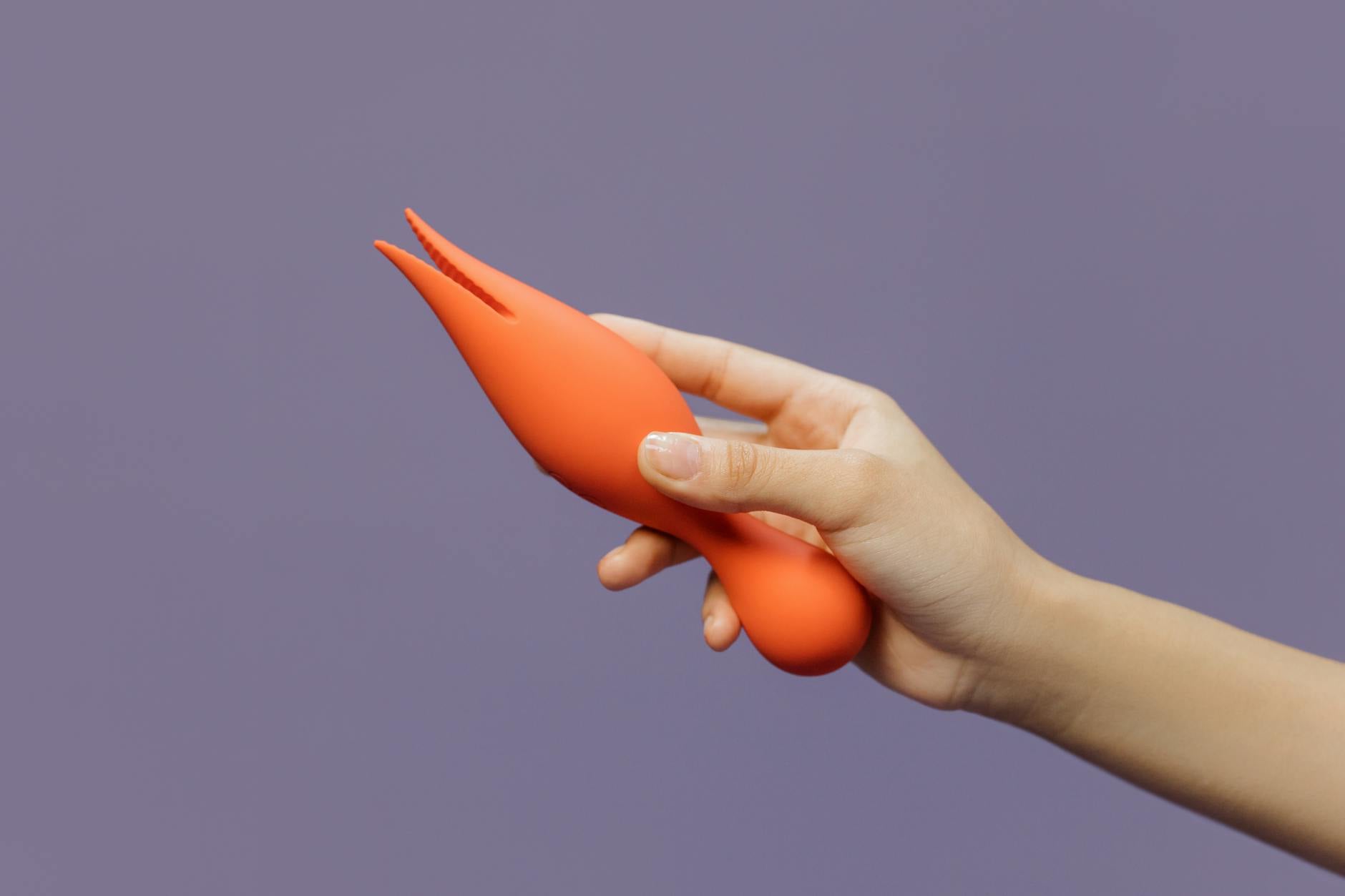
A lemon clitoral vibrator isn't a replacement for your partner. It's an addition to what you two already have. The Lem works through suction and vibration patterns that your partner's body literally cannot replicate. It's not better than him. It's different. Same way your vibrator isn't competing with actual intercourse. They're different experiences that live in the same body.
The easiest reframe: "I want us to explore this together. It's not about replacing anything. It's about both of us having more options."
That sentence works because it's collaborative, because it's true, and because it frames the toy as expanding the menu, not replacing what's already there.
Here's the structure I recommend. Use these in order:
1. Choose the right moment. Not during sex. Not when either of you is stressed or tired. Early evening, both of you fed and awake, somewhere private. Not during the buildup to sex either. Just a conversation.
2. Lead with positive intent. "I've been thinking about our sex life, and I love what we have. I also want to try some new things together, and I found something I think we'd both enjoy." That's it. Simple. You're not apologizing for wanting to expand things.
3. Show, don't tell. Pull up the product page or actually show them the Hello Nancy Lem if you have it. Let them see it's not some alien thing. It's a tool designed for a specific kind of stimulation. Lemons are discreet, weirdly cute, not scary.
4. Explain what it actually does. "It uses suction and vibration on the clitoris. It's nothing like traditional vibrators. Some people describe it as way more intense than a regular toy, but in a different way." You're giving information, not selling.
5. Make it about curiosity, not dissatisfaction. "I'm curious what this feels like. I want to try it with you because you matter to me, and this is something I want to explore together." Again, collaborative language. You're inviting him into something, not asking permission to do something without him.
6. Give him space to respond. Don't fill silence. Let him ask questions. Some partners will say yes immediately. Some will need time. Some will want to read about it themselves. All of those are okay.
If he says no, that's a different conversation. But most of the time, if you lead with "let's do this together" instead of "I need this alone," you won't get no. You'll get curiosity.
If he says yes (or "let's try it"), here's the structure that works:
Start with foreplay you already know. Don't crack open the lemon vibrator five seconds in. Build arousal the way you normally do. Kissing, touching, whatever gets you both engaged.
Then bring it in naturally. "I want to try this now." You could be on top, you could be lying down, but the positioning matters less than the communication. Once the toy is in play, you might give him control of it while you touch him. Or he might step back and watch. There's no script.
Here's the thing that usually surprises partners: watching someone you care about experience intense pleasure is actually hot. The defensiveness or insecurity usually evaporates once he sees that you're genuinely enjoying yourself and that he's part of making that happen.
You might feel weird letting him see you with the clitoral vibrator. Letting someone watch you come is vulnerable. That's legitimate. Here's how to move through it:
First, acknowledge the feeling. You don't have to hide that you're a bit shy. "I'm a little self-conscious, so bear with me." Most partners will immediately soften and get more attentive when they hear that. It's the opposite of killing the mood.
Second, remember that pleasure is attractive. When someone sees their partner coming, the most common response isn't judgment. It's attraction. You look alive. You look like yourself. That's magnetic.
Third, you can build up to it. You don't have to let him watch a full orgasm on night one. Maybe he's present for the warm-up, then you finish alone, or you finish together in a position where you're less exposed. The integration doesn't have to happen all at once.
You're not performing. You're not proving anything. You're letting him see a real part of your sexuality. That's different.
Sometimes even with perfect communication, the first time feels a bit off. That's normal and doesn't mean you did anything wrong. A few things that help:
Normalize the awkwardness. "This feels a little weird at first, right?" Let him say yes. That relieves the pressure of it needing to be seamless.
Keep talking. "That feels good." "I like when you touch me while I use this." "Does watching this turn you on?" Real-time communication makes it less transactional and more intimate.
Try it more than once. The first time is data collection. The second time is when it actually becomes hot. Your body relaxes. You stop monitoring yourself.
Separate the toy from the relationship. If something feels off emotionally, that might not be about the toy at all. It might be about something else in the relationship that needs attention. A lemon vibrator doesn't fix disconnection. It highlights it. If you're using it as a Band-Aid for a deeper issue, it won't feel right, and that's worth addressing separately.
Many couples find that introducing a clitoral toy becomes a regular part of their routine. Some use it every time. Some use it sometimes. Some introduce it, enjoy it a few times, then don't again for months. All patterns are fine.
What matters is that you had the conversation, you weren't self-conscious about wanting something, and you invited your partner into it instead of hiding it. That's the model for basically every other thing you'll want to explore together. The toy is just the practice round.
Your desire isn't a threat to your relationship. It's an invitation. Frame it that way, and your partner will usually accept.
Respect that boundary. It doesn't mean the relationship is broken. But also explore why. Is it a value thing? An insecurity? A misunderstanding? Having that conversation without judgment matters more than the toy itself. You might also ask if he'd be open to it later, or in a different context, rather than dropping it entirely.
Absolutely. In fact, I recommend it. Get comfortable with how it feels, learn your favorite settings, and understand your own response before introducing another person into the mix. You'll feel more confident and less self-conscious because you actually know what you're doing.
Only if you frame it that way. If you say "I love what we do AND I want to explore this," it's expansion, not replacement. Most partners only feel inadequate if you make it sound like the toy is fixing a problem he created. It's not. It's adding a new type of sensation to your shared experience.
That's okay. Different stimulation patterns create different responses. It doesn't mean regular sex is bad. It means your body responds to variety. That's information, not a judgment. Many couples find this actually improves their sex life because it takes pressure off partnered sex to be the only way you orgasm.
Start broader: "I've been thinking about trying new things in our sex life. What would you be open to exploring?" Listen to his answer. Then you can get specific. The question opens the door. The toy is just one option on a longer list of possibilities.
Not at all. Many couples actually prefer it. He gets to be actively involved instead of just watching. He can control the pressure and pattern. He's participating in creating your pleasure. That's intimate, not weird.