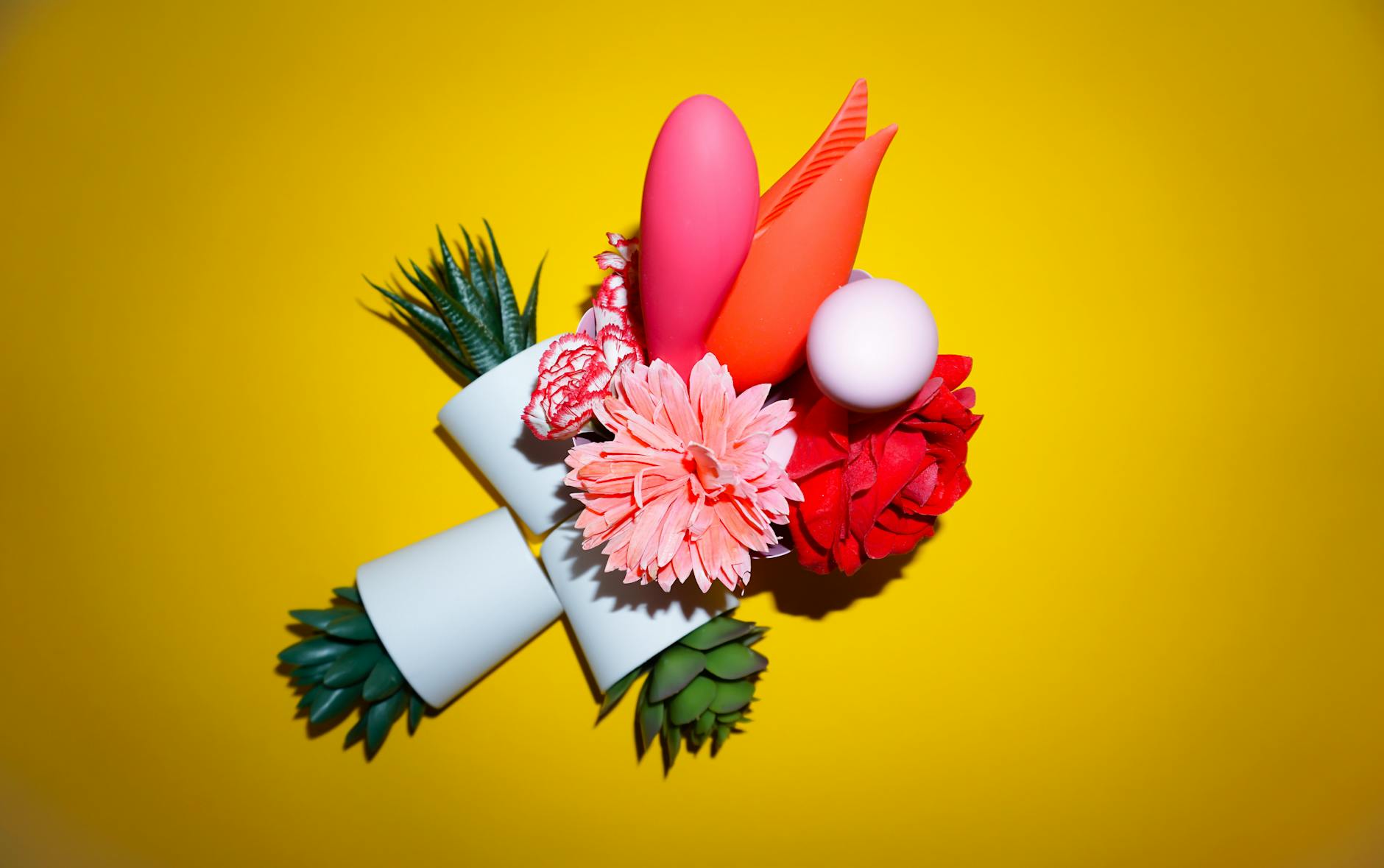
You're in a committed relationship and you still want solo time with a lemon vibrator. The guilt hits before the pleasure does. You might wonder: Does wanting this mean something's wrong? Am I hurting them by doing this alone? Should I hide it?
Honestly, wanting solo pleasure while partnered is one of the healthiest signs your relationship can have. It means you understand that your pleasure belongs to you first.
There's a myth that says if you're happy in your relationship, you don't need solo sex. That's not how desire works. Here are the real reasons people in healthy partnerships use a lemon clitoral vibrator alone.
First, rhythm. Your partner has their own arousal cycle, energy levels, and needs. You might crave intensity at 11 p.m. on a Tuesday. They might need sleep. A lemon vibrator means you don't have to sync your body to someone else's schedule.
Second, exploration. Solo pleasure is where you discover what actually feels good without performing, without considering their comfort, without calibrating your sounds or movements to make them feel good. When you're alone with a lem vibrator, you're having a conversation with your own body, not managing a duet.
Third, self-regulation. Orgasms aren't just physical. They're stress relief, sleep aids, anxiety management. Using a lemon vibrator solo is maintenance. It's taking care of yourself the way you'd take a walk or shower.
Fourth, it actually improves partnered sex. When you know your body's signals because you've spent time alone with a clitoral vibrator, partnered sex becomes easier and hotter. You can guide them better. You know what works. The confidence alone changes everything.
The first is with yourself. Solo pleasure doesn't require your partner's permission. It never does. Your body, your time, your choice. The sooner you believe that, the sooner you can move through guilt and into ownership.
The second is with your partner, but it's not "Can I use a lemon vibrator alone?" That's the wrong question because it frames it as negotiation. The right conversation is "I want to talk about how I'm taking care of myself sexually. It doesn't involve you, and that's actually healthy for us." Notice the difference. One asks for approval. The other shares a boundary.
Some partners will feel insecure. That's not your burden to solve, but it's worth understanding. Insecurity often disguises itself as questions about the toy. "Is it better than me?" usually means "Do you still want me?" Those are different problems. You can use a lem vibrator and still deeply want your partner. Both things are true simultaneously.
If your partner struggles with your solo pleasure, the fix isn't hiding it. The fix is therapy. Mine did, and it took work, but watching them move from jealousy to seeing my solo sex as self-care changed our entire dynamic.
First, don't hide it, but don't broadcast it. You don't narrate your trips to the bathroom. Solo pleasure sits in the same category. It's normal, unremarkable maintenance. If they ask, you answer directly. "Yeah, I used my lemon vibrator this morning." That's it. Keeping it private isn't the same as keeping it secret.
Second, your solo time doesn't replace partnered time. If you're using a clitoral vibrator alone three times a week and having sex with your partner once a month, the math is off. Not because solo pleasure is wrong, but because intimacy with them is also non-negotiable. Make sure solo pleasure is addition, not substitution.
Third, talk about the bigger picture. If you suddenly want much more solo pleasure than before, that's data. Maybe you're stressed. Maybe you're reconnecting with your body. Maybe the relationship needs attention. Figure out what the change means before your partner interprets it as rejection.
A quality lemon sucker like Hello Nancy's Lem gives you feedback your body might not have expressed before. Stronger, faster patterns. Deeper sensation. Some people discover they can have multiple orgasms only when they're alone with the right toy. Some realize they've been faking pleasure in partnered sex because they didn't actually know what their body wanted.
That information is gold. Alone with your lemon clitoral vibrator, you get to be selfish. Loud. Slow. Fast. Whatever. You get to find the patterns, angles, and intensity that light you up. Write it down mentally. Come back to it with your partner.
Sometimes a partner will say, "Can I watch?" or "Can we do this together?" That's different from solo time. Solo means alone. You get to decline. "This is my time to myself. When we have sex, I'll bring what I learn." Simple.
If they push, that's a red flag worth examining with a therapist. Respecting boundaries is baseline.
If your relationship has friction around solo pleasure, here's a realistic pace: Talk about it once, clearly. Let it sit for a week. Observe your partner's actual behavior vs. their words. If they say they're fine but act resentful, that resentment needs naming. Don't go faster than they can process, but don't go slower than you need to. Your self-care isn't negotiable. Their healing speed is their responsibility.
When you have a rich solo sex life with your lemon vibrator, three things shift. You stop expecting your partner to be your only source of pleasure. You stop performing and start experiencing. You become more confident in your body, which is wildly attractive. Partnership sex becomes something you want, not something you need to extract from them. That's the difference between a stuck relationship and one that breathes.
Solo pleasure isn't a threat to partnership. It's proof that you're taking yourself seriously.
If you grew up hearing that solo sex is shameful, or that partnered people shouldn't want it, you'll feel weird about using a lemon clitoral vibrator alone even after you've decided it's okay. That's normal. Shame lives in the body. It doesn't vanish because you've intellectually decided something is fine.
Here's what helps: use the lemon vibrator anyway. Shame doesn't actually prevent pleasure. It just adds a layer of static. The more you do it, the more normal it becomes, and the quieter the shame gets. Eventually it leaves.
If your partner is actively punishing you, controlling access to privacy, or framing your solo pleasure as cheating, that's not a relationship problem. That's a boundary violation. Get support from a therapist or counselor before anything else.
If you feel guilty every time you use your lemon vibrator solo despite your partner saying it's fine, therapy is also worth it. Guilt that persists despite reassurance is usually about something deeper than the toy.
Using a lemon sucker alone while partnered isn't a problem to solve. It's a normal part of being an adult with your own body. The only real work is moving past the guilt and into ownership. Everything else follows from there.
There's no normal. Some people use a lemon clitoral vibrator daily. Some monthly. What matters is that you're doing it for yourself, not because you're avoiding your partner or because they're pressuring you. If you're wondering whether your frequency is too high or too low, ask yourself why. The answer usually has nothing to do with the toy.
You don't need to announce it. You also don't need to hide it. If they ask, answer honestly. If they don't ask, there's nothing to tell. Think of it the way you'd treat any private body care. You don't narrate showering or brushing your teeth, and you don't need to narrate solo pleasure either.
Maybe, at first. That's usually insecurity talking, not reality. A toy can't replace emotional intimacy, vulnerability, or the specific pleasure of being wanted by another person. What a lem vibrator can do is give you reliable, consistent sensation on your terms. Frame it that way. "This helps me understand my body better so I can be more present with you."
That's a separate conversation. Some people feel differently about toys during partnered sex versus solo use. Explore that. "Would you feel better if I used the toy with you sometimes?" might open a door. But again, your solo pleasure is non-negotiable. Partnered use is a bonus, not a requirement.
No. It's a sign you have a healthy relationship with your own body. The strongest partnerships include strong individuals. Solo pleasure is part of that. If relationship struggles exist, they exist for other reasons. Don't blame the toy.
Repeat the behavior. Guilt fades with familiarity. Use your lemon sucker alone. Notice that the relationship doesn't crumble. Notice that partnered sex might actually improve. Over time, the cognitive dissonance resolves and guilt quiets down. You're retraining your nervous system to see solo pleasure as normal, not transgressive.